fusanilab
Behaviour, Physiology & Ornithology
PhD in behavioral ecotoxicology
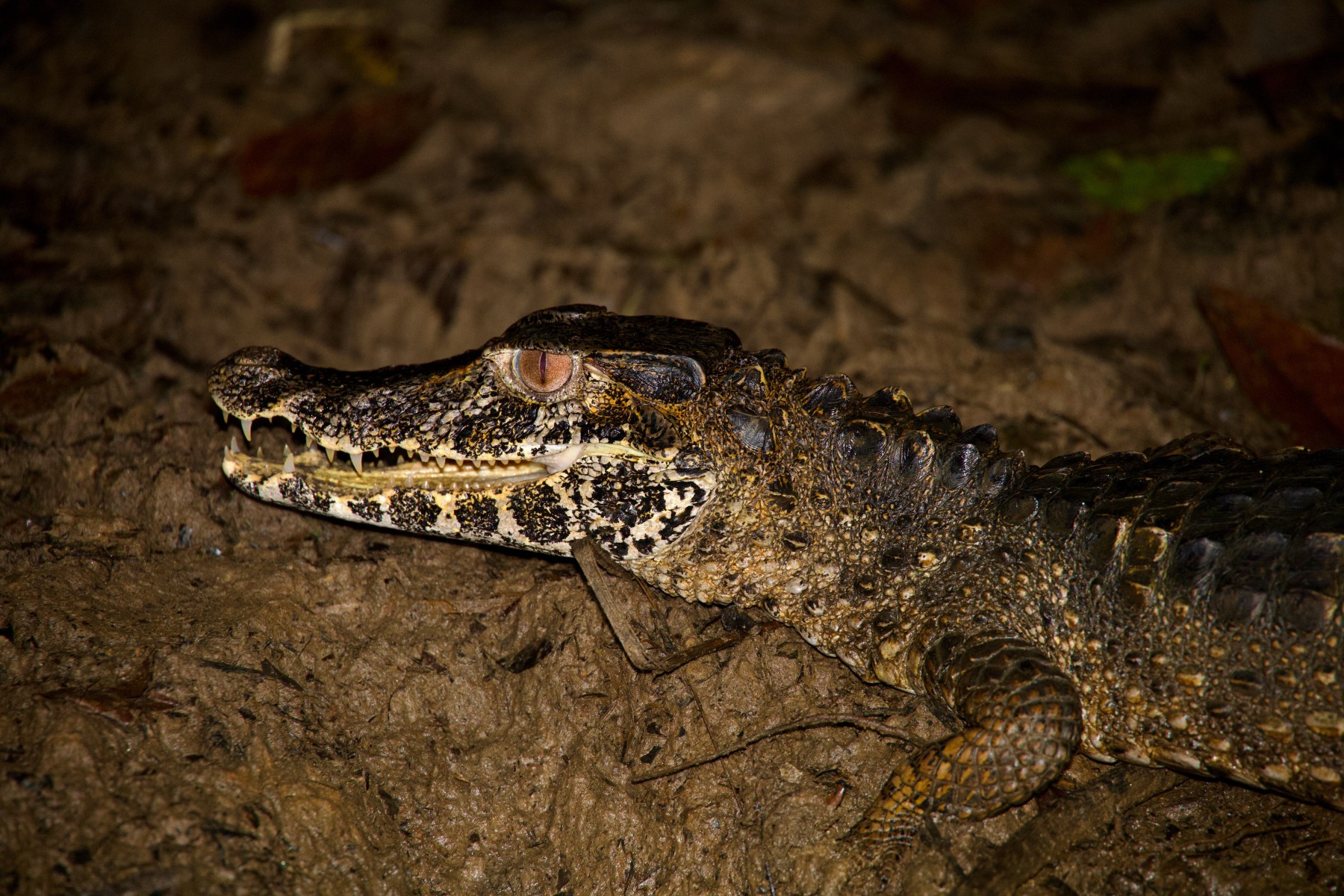
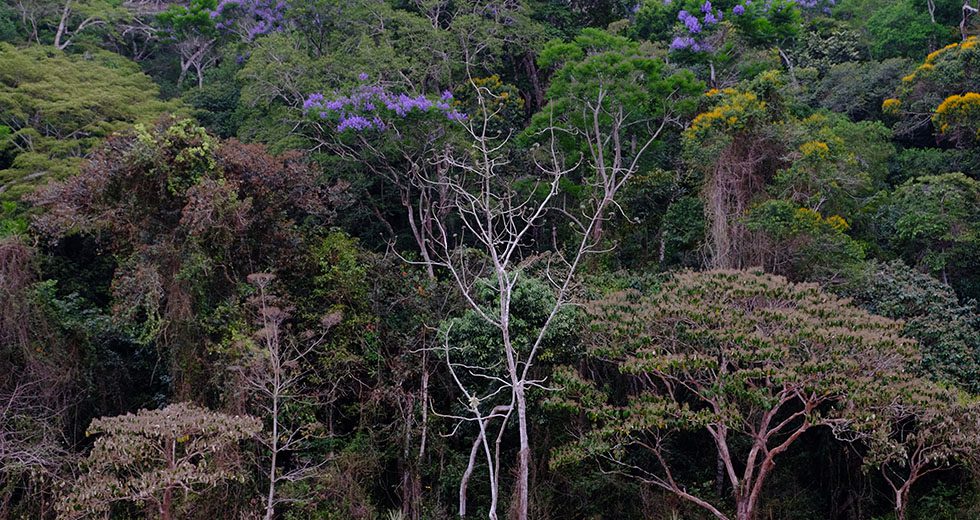
We have an opening for a PhD position at the Department of Behavioural and Cognitive Biology at the University of Vienna. The project involves field & laboratory research on the effects of mercury contamination on behavioral endocrinology of a neotropical caiman.
Spring migration frugivory may act as a quick nutrient uptake strategy for migrating passerines

Before embarking on a migratory flight, birds often exhibit extreme changes in their feeding behaviour and gut physiology, such as increased feeding, digestive organ remodelling, and shifts in diet. Many passerine species switch from insects to fruits during autumn migration, but we do not known if such a dietary switch occurs during spring migration in temperate zones, when fruit production typically is rare.
During our spring fieldwork on the island of Ponza (Italy), we discovered two plants, Prasium majus and Rhamnus alaternus, that produce fruits in spring. We monitored the fruiting season of both plants and collected faecal samples of six different passerine species to understand whether birds use the available fruits as a refuelling resource in spring. We found that the fruits of P. majus were generally preferred by all species, and garden warblers (Sylvia borin) had the highest occurrence of seeds of both plants in their faeces. The availability of ripe P. majus fruits increased over the spring migration season and was positively correlated with the number of faecal samples containing seeds.
Our work reveals a so far overlooked relevance of P. majus and R. alaternus fruits as spring stopover refuelling resources for at least five ‘normally insectivorous’ passerine species at a temperate zone stopover site. Frugivory may represent an easy way for birds to rapidly acquire water, micro-, and macronutrients during spring migration, particularly at stopover sites such as Ponza which are poor in resources and where birds typically stop over for short time periods. Fruit consumption may help individuals to quickly resume migration to reach their breeding grounds or stopover places richer in nutrients.
The full article can be found in Ecology and Evolution http://dx.doi.org/10.1002/ece3.72239.
Victoria’s riflebirds ‘mesmerize’ potential mates with accelerating dances

The courtship displays of birds-of-paradise have been often described as the most spectacular in the animal kingdom. The difficulty in studying these species, that live in rainforests of New Guinea and Queensland, has limited our understanding of the function of their courtship displays. We show here that the courtship display of males of Victoria’s riflebirds is a dynamic sequence of accelerating wing-claps intercalated by yellow flashes produced by showing the yellow interior of the beak. Only males that succeed in displaying for at least 16 seconds can reach a tempo plateau and have then chances of obtaining a copulation.
You can access the full text of the paper here.
Migratory passerines cope well with mild weather variability

Migration is a predictable yet energy-intensive phase of birds’ life cycle, often involving crossing large ecological barriers with no opportunity to rest or refuel. The decision to embark on the journey strongly depends on environmental cues and the amount of energy reserves. Although birds can select favourable weather conditions at departure, weather variability during a barrier crossing may affect the use of energy reserves and the ability to cope with unpredictable events.
We investigated the effects of tailwinds and temperature encountered over the Mediterranean Sea during the pre-breeding migration on physiological conditions of two trans-Saharan migrants, the garden warbler (Sylvia borin) and whitethroat (Curruca communis), upon arrival to a stopover site, the island of Ponza. Our question was whether the ability to respond to a stressful event was influenced by the whether conditions experienced during the crossing.
We found that birds were not significantly affected by weather variability during the sea crossing if they had sufficient energy reserves. Both species were able to mount a full acute stress response as measured by the release of the hormone corticosterone. In the garden warbler, higher temperatures actually facilitate the response. These findings offer novel insights into corticosterone dynamics and physiological flexibility during spring migration. The paper has been published in Journal of Avian Biology and is freely accessible here.
Super-fast breakdown or testosterone regulate male phenotypes in ruffs

Photo courtesy of © MPI for Biological Intelligence / Axel Griesch
Ruffs have three male morphs that differ in the expression of male sexual behaviour. A collaborative study together with colleagues of FU Berlin, Helmholtz Munich, Simon Fraser University, Burnaby, and the Max-Planck-Institute for Behavioral Intelligence, showed that these differences are mainly due to the regulation of circulating levels of testosterone in the blood of males. A modified enzyme breaks down the concentration of testosterone very rapidly in the morphs that show low levels of aggression toward other males during courtship.
Check the press release here. To access the publication online, follow this link. If you want to download a free copy of the paper, please visit this web site and click the link in the panel “External resources”.
Energy savings of formation flight in a migratory bird

Every year we assist to one of the most wonderful animal journeys, bird migration. Many species of birds travel yearly from their wintering to their reproductive grounds and vice versa, sometimes flying for thousands of kilometers. Yet, migration is a strenuous trip for them to the point that some individuals perish. Therefore, birds evolved a series of behavioural and physiological adaptations, which can help them to face migration. Among the behavioural adaptations we can find flight strategies, such as formation flight.
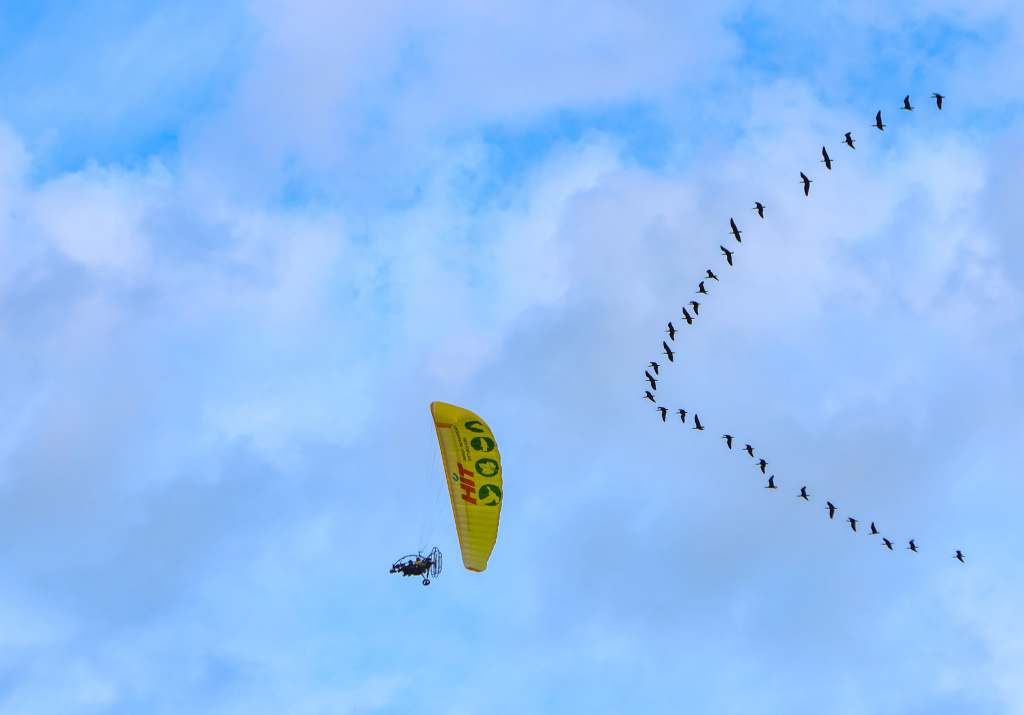
During formation flight, birds fly in a structured flock that can resemble a line, a J or a V. This type of flight has always amazed biologists, who tried to understand why birds would fly in this way. The main hypothesis was that they can save metabolic energy by flying in the wake of another individual. However, evidence was scarce, especially with free-flying migrating birds.
We designed a study to measure if birds saved energy while flying in formation flight. We used as model species the Northern bald ibis (Geronticus eremita) and collected data on formation flight during a human-led migration with an entire flock of individuals. We collected data on their position in space, body acceleration and heart rate. After determining when birds flew in-wake (click here to learn how we did it) , we correlated this with heart rate frequency and dynamic body acceleration (an proxy for energy expenditure).
Our results show that birds saved energy, especially during flapping flight, but these savings are smaller than we expected. We observed a decrease in dynamic body acceleration and heart rate, the latter being rather variable across birds. In addition, we learnt that birds save energy most likely by skipping wingflaps, which means that they glide more when in-wake.
The article was published in Proceeding of Royal Society B and we invite interested readers to give it a look here.
How fish reveal the link between stress and problem-solving
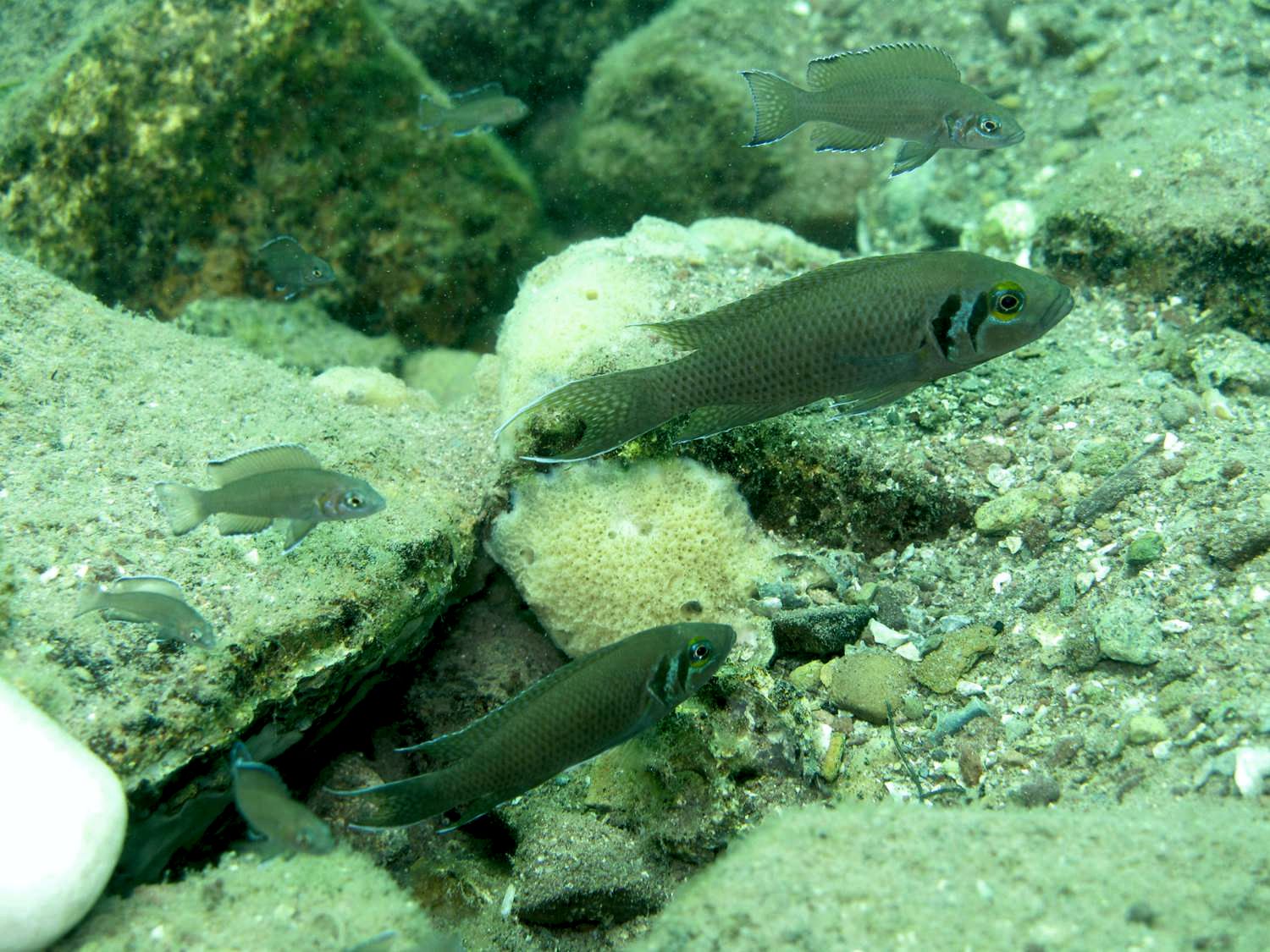
Adapting to new situations is key to survival, and stress plays a big role in this. Our recently published study on fish (Neolamprologus pulcher) shows how stress affects behavioural flexibility, which is the ability to solve new problems in changing environments.
What did we do? Unlike previous research on lab rodents, our study tested fish in natural conditions. We blocked glucocorticoid receptors (GR) in the fish to prevent stress recovery and then exposed them to a predator. Fish faced then a detour task, where they had to find a new route to safety after their usual path was blocked.
What did we find? While both groups of fish took the same time to reach the shelter, GR-blocked fish made more mistakes and showed more fear-related behaviors. This suggests that without recovering from stress, the fish struggled to adapt, potentially linking stress recovery to behavioural flexibility.
What does this mean? These findings provide valuable insights into how animals – not only fish – deal with stress in real-world situations. Understanding this relationship helps us to gain a better understanding of effective and adaptive strategies for coping with a changing environment.
The paper was published in Physiology & Behavior and you can read it here.
Job Opening – 4 y Post-Doc – DEADLINE EXTENDED to May 1st!
Computational Biology / Behavioral Analysis
We are seeking a candidate with experience in applying modern computational tools for the study of complex biological patterns. We have acquired instruments to record courtship behaviour of birds in both natural and laboratory settings. Additionally, we have developed methods to analyse these recordings through semi-automatic motion tracking and the detection of behavioural patterns using machine learning tools. Moreover, we have several ongoing projects spanning from avian migration physiology to association between genes and behaviour in elaborate courtship. We are searching of an experienced data scientist who can assist us in experiment planning and data analysis.
Follow this link to access the official job advertisement (in German)
You can download an English version of the job advertisement below.
Evidence of “sneaky” males in a bird of paradise?
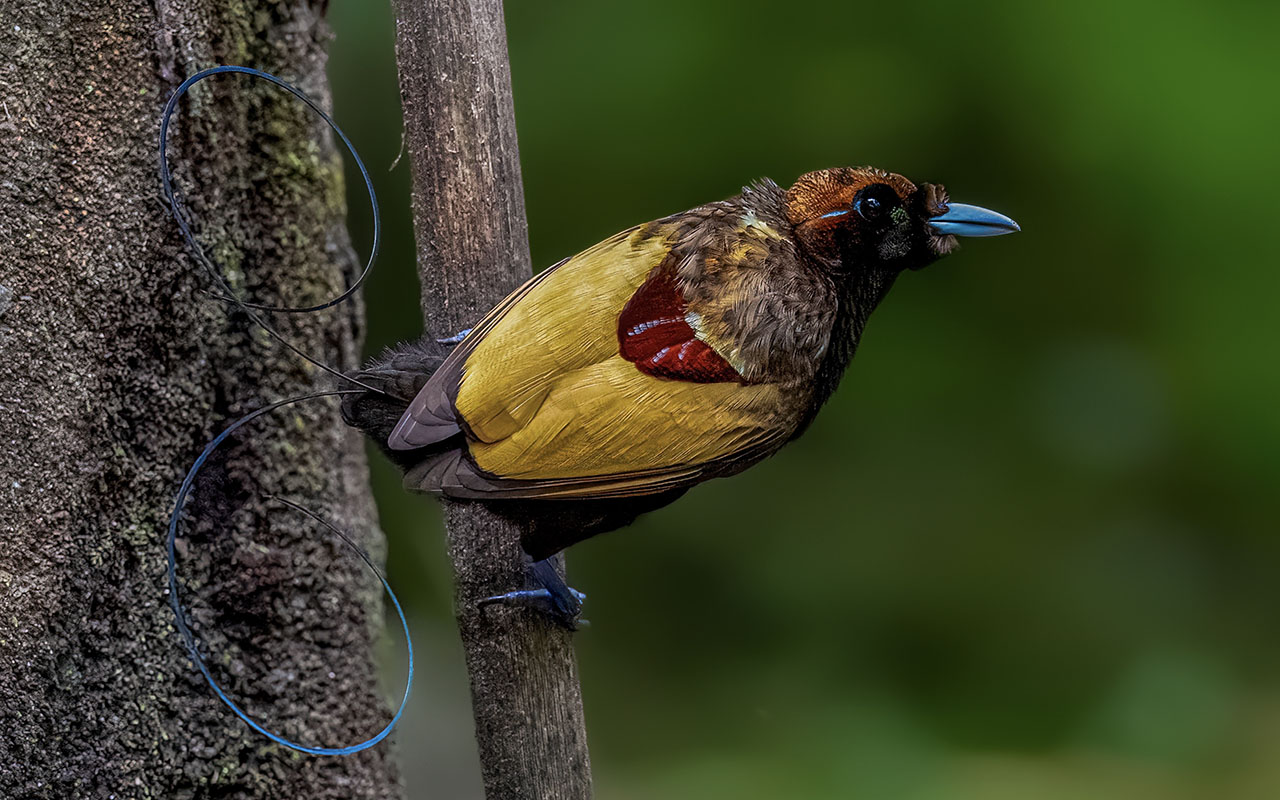
We screened the largest video database of displaying birds of paradise (The Macaulay Library of the Cornell Lab of Ornithology) and found videos showing matings between female-plumaged individuals! This phenomenon has only been described a handful of times in the wild, once in the 1980s in Goldie’s Bird of Paradise and again in the 1990s in Lawes’ Parotia.
While many of the cases we observed were likely matings between adult females, which is generally rare in birds, in one species—the Magnificent Bird of Paradise—we think they are most likely performed by immature males. These young males look like females until they are old enough to grow their characteristic ornamental feathers, and may aggressively try to mate with females that are being displayed to by adult males.
While we weren’t able to verify this hypothesis, as we couldn’t tell the birds’ sex, our study represents some of the best evidence to date of alternative mating tactics in the birds of paradise!
The journal Ethology will also feature this spectacular shot by photographer Dustin Chen on the front cover of their upcoming issue! You can read the paper following this link.
When less is more

Sexual selection research has been dominated by the notion that mate choice selects for the most vigorous displays that best reflect the quality of the courter. However, courtship displays are often temporally structured, containing different elements with varying degrees of intensity and conspicuousness. For example, highly intense movements are often coupled with more subtle components such as static postures or hiding displays. Here, we refer to such subtle display traits as ‘coy’, as they involve the withholding of information about maximal display capabilities. We examine the role of intensity variation within temporally dynamic displays, and discuss three hypotheses for the evolution of coy courtship behaviours. We first review the threat reduction hypothesis, which points to sexual coercion and sexual autonomy as important facets of sexual selection. We then suggest that variation in display magnitude exploits pre-existing perceptual biases for temporal contrast. Lastly, we propose that information withholding may leverage receivers’ predispositions for filling gaps in information—the ‘curiosity bias’. Overall, our goal is to draw attention to temporal variation in display magnitude, and to advocate possible scenarios for the evolution of courtship traits that regularly occur below performance maxima. Throughout, we highlight novel directions for empirical and theoretical investigations.
The paper “When less is more: coy display behaviours and the temporal dynamics of animal courtship” by Thomas MacGillavry, Giovanni Spezie and Leonida Fusani was published in Proceedings of the Royal Society B: Biological Sciences
 fusanilab